Progressive overload tracker
Track progressive overload without guessing what to add next.
Previous performance stays visible so you can decide when to add weight, reps, sets, or recovery.
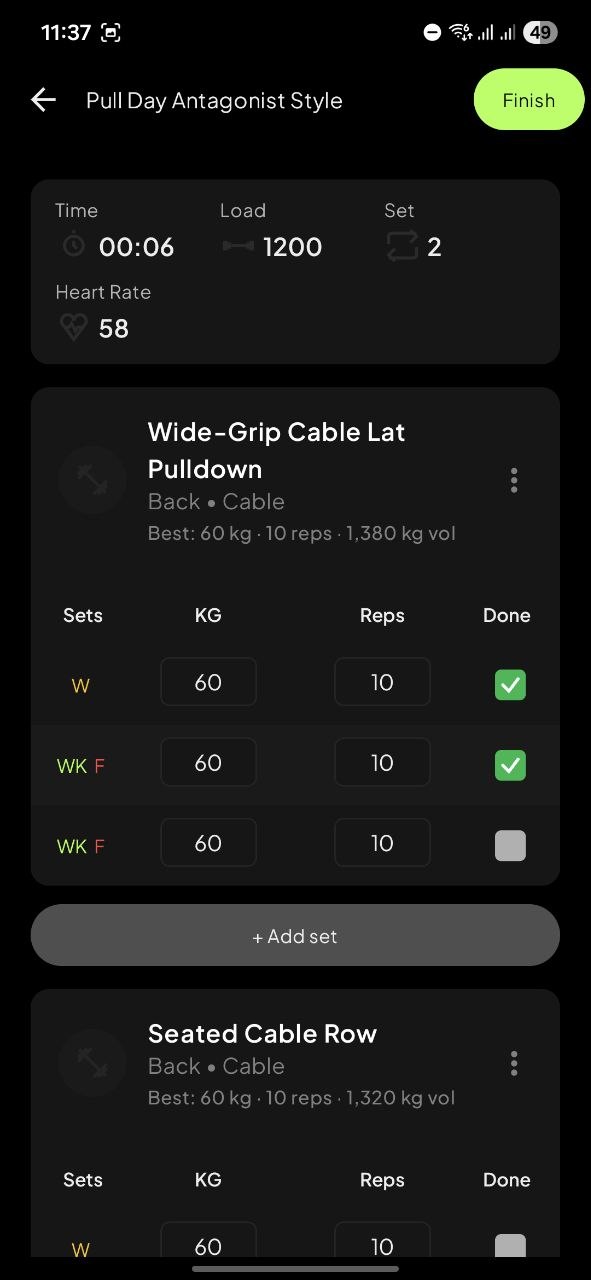
Context where you need it
See the last session before the next set
Right before a working set, Activ.run shows what you did last time — last weight, last reps, and PR markers — so the decision to push is informed, not hopeful.
- Last weight and reps shown inline
- PR markers on every exercise
- Session-by-session history, always one tap away
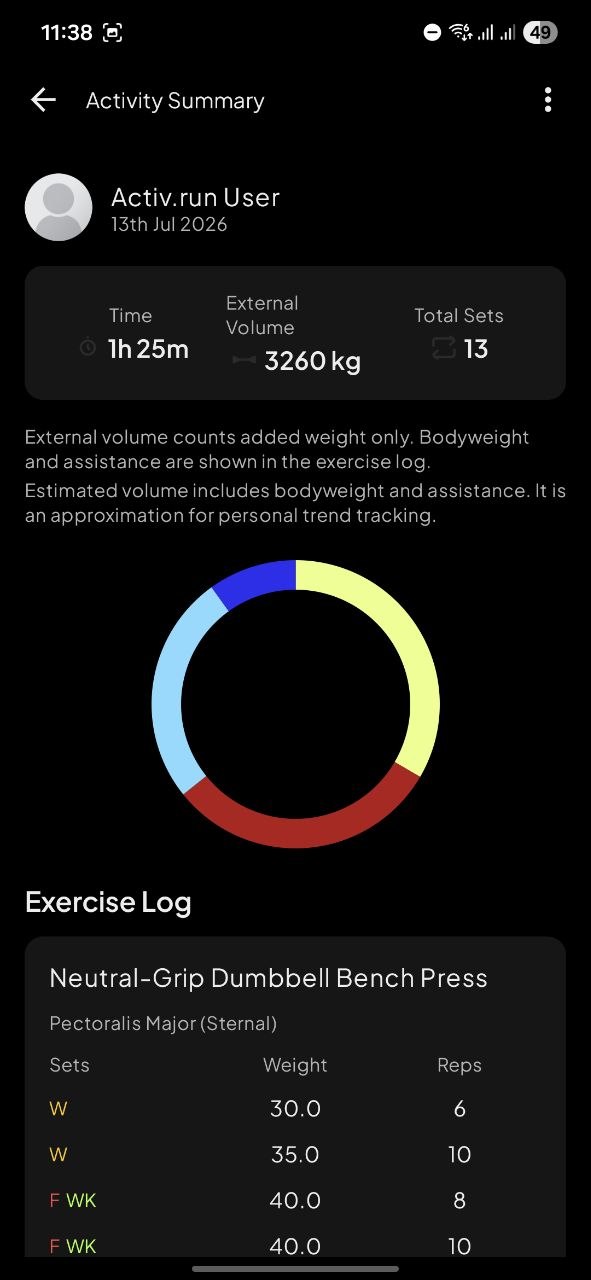
More than the top set
Track more than the top set
A single number hides most of the story. Training volume and estimated 1RM reveal progress even when one lift stalls — so you can keep moving forward with confidence.
- Training volume trends per exercise and session
- Estimated 1RM from weight × reps
- Progress views that catch hidden gains
The fundamentals
What is progressive overload?
Progressive overload is the principle that to keep getting stronger, you have to gradually increase the demand on your muscles over time. That doesn't only mean adding weight — you can add reps, add sets, slow the tempo, improve range of motion, or shorten rest. The key is that the stimulus trends upward across weeks, not that any single session is a maximum effort. A tracker helps because progression depends on remembering exactly what you did last time and comparing it honestly — which is hard to do from memory or a paper notebook. Activ.run keeps that history in front of you and turns it into volume and 1RM trends, so you can apply overload deliberately instead of by feel.
Progressive overload FAQ
Common questions
How does Activ.run help progressive overload?
It keeps your previous performance visible while you train, and tracks volume and estimated 1RM over time — so you can decide when to add weight, reps, or sets instead of guessing.
Can I track reps and weight together?
Yes. Every set records weight and reps, and Activ.run uses both to estimate 1RM and total volume, which reveal progress even when your top weight hasn't moved.
What's a good way to progress when I stall?
When weight stalls, look at the other levers: add a rep, add a set, tighten rest, or improve a slowdown in recovery. Activ.run shows volume and 1RM trends so a stalled top set doesn't hide real progress underneath.
Keep exploring
More ways to train
Know what to beat before set one.
Previous performance, PRs, volume, and estimated 1RM — in one app with your runs. Free on Google Play.